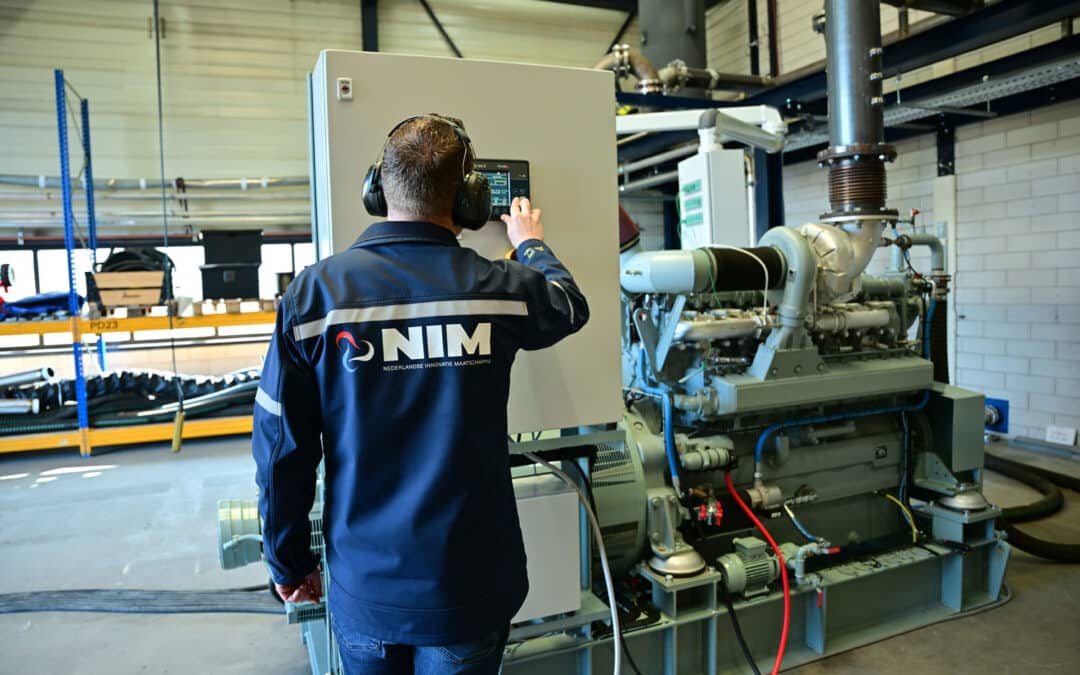
The maritime sector is on the verge of a fundamental transition. Making the industry more sustainable is no longer a vision of the future, but a concrete challenge. The Dutch Innovation Company (NIM) is launching a new development project: the creation of a dual-fuel methanol engine. It is a project centered on technical innovation, practical experience, and collaboration.
Why Methanol?
Methanol (CH₃OH) wordt steeds vaker genoemd als kansrijke alternatieve brandstof voor de scheepvaart. Het is vloeibaar bij omgevingstemperatuur, relatief eenvoudig op te slaan en kan, mits groen geproduceerd, bijdragen aan een aanzienlijke reductie van CO₂- en NOₓ-emissies. Tegelijkertijd vraagt de toepassing in bestaande en nieuwe motoren om doordachte engineering en robuuste oplossingen. Lees meer over methanol in de scheepvaart.
The role of NIM
NIM was established to turn innovation in the maritime sector into a concrete reality. It achieves this not by gathering isolated ideas, but by structurally organizing the development process—from concept to validated product. The dual-fuel methanol engine project is the first tangible example of this approach.
The premise is clear: to develop an engine concept that uses methanol as a sustainable fuel, without compromising on reliability, safety, or practical applicability.
From plan to process
In this initial phase, the focus is on formulating the development plan. Which technical choices make sense? Which existing engine platforms offer a starting point? And how do we ensure that this does not become merely a paper exercise, but a process that actually leads to practical solutions for shipowners, shipyards, and suppliers?
Daarbij kijkt NIM nadrukkelijk verder dan alleen de motor zelf. Ook randvoorwaarden zoals regelgeving, certificering en operationele inzetbaarheid nemen we vanaf het begin mee.
A transparent development process
The NIM shares a monthly update on this project—covering not only the successes but also the questions, choices, and challenges encountered along the way. This offers a glimpse into the development process of an innovative maritime technology.